
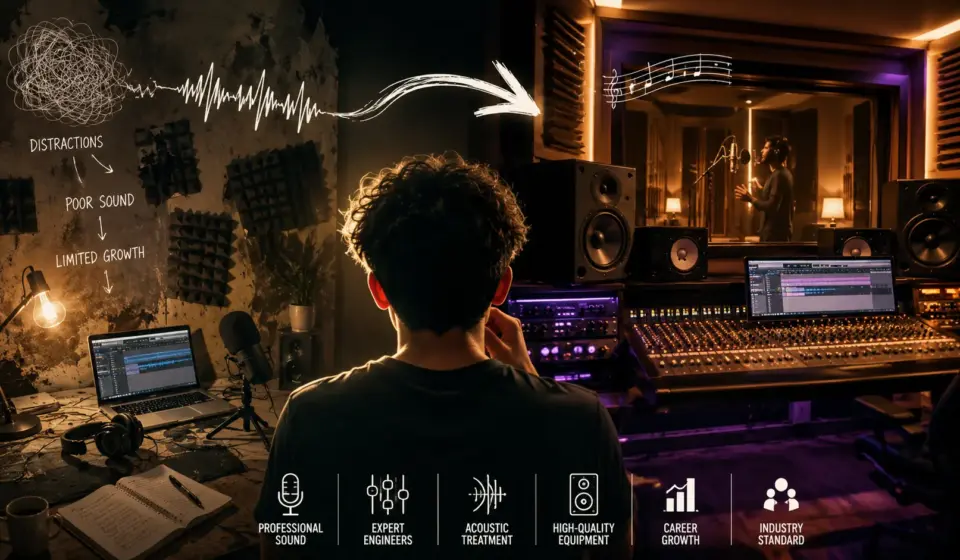

Recently, we have observed a surge in emerging artists. Especially during the pandemic. Out of boredom, they picked up their ukuleles or guitars and turned their bedrooms into home recording studios.
Whether for entertainment purposes only or to experiment with vocals, they became great singers with a strong fan following on platforms like Instagram, TikTok, and YouTube.
While a few artists used basic recording software and affordable microphones, most just utilized the echo of their bedrooms.
But to lead in the music industry, they approached professional recording studios. With high-quality music equipment and skilled audio engineers in the background to tune every track, today they stand their ground as successful musicians.
In this blog, you will discover how a well-designed recording studio can take your music career to the top level.
Gap Between Home Demos and Radio Quality
This gap is defined by the recording room environment and the quality of equipment used. If your goal is to create a music track that is ready for live-streaming, then upgrade from basic foam panels and microphones.
Why does “Soundproofing” not work?
To prevent sound from entering or leaving a room, you need a “room within a room” makeover, mass-loaded vinyl layers, and heavily sealed windows and doors. Placing thin acoustic foam or thermocol sheets onto a wall doesn’t stop the non-stop rumbling of a generator or street traffic. These lightweight objects only catch the highest frequencies. This results in dull-sounding vocals.
Moreover, low frequencies bounce between parallel walls, leaving dead spots and large frequency room modes. This can be controlled by placing bass traps in the room’s corners to tame low-frequency energy.
The Power of High-Quality Signal Chains:
For beginners, there is no problem using USB microphones that are easy to operate. They combine the microphone, preamp, and audio converter into a single device. However, the overall sound quality is less impactful and often builds more background noise.
However, to achieve professional depth and warmth in your sound, integrate tube condenser microphones that use high-quality components and power supplies. They are great for recording vocals as they pick up natural tones more effectively.
Vocal Artistry Beyond the Software:
In South Asia’s music industry, especially Pakistani music, there is always a presence of the human element. It represents soul, raw emotions, and cultural lores that encompass beyond the digital workstations.
The Role of Expert Producers & Engineers:
They balance raw feelings and modern technology by improving melodies with their professional guidance.
Producers do not just hit records. They act as song doctors by evaluating where a melody drags or what it lacks. They improve tempo, key, and lyrical phrasing to make the song engaging from the beginning. Objective feedback during sessions from the producers lets the artist understand vocal execution, thus saving time and avoiding creative dead ends.
Besides, music engineers customize instruments or songs to match the artist’s unique voice. They achieve that by making careful adjustments to volume, EQ, and compression depending on the track.
Furthermore, they acoustically calibrate studio rooms to ensure a consistent sound mix during recording. This way, the music can be heard accurately whether it is played on car speakers, streaming apps, or regular headphones.
Meet Global Music Standards:
You cannot simply follow global music standards in your room-based studio. However, a professional song recording studio aligns creative, technical, and business elements at an international level.
Understand LUFS and Streaming Requirements:
- The Loudness Units Full Scale (LUFS) is a standard metric for measuring perceived volume of a track, not just its highest peak.
- Spotify standardizes music tracks to -14 dB LUFS. So when a song is louder (-8 dB LUFS), Spotify lovers adjust the playback volume to match the rhythm.
- In contrast, Apple Music maintains tracks to -16 dB LUFS with Sound Check.
Why Labels Prefer Studio-Grade Demos:
- Industry experts look for well-mixed demos that can be directly distributed.
- Labels value song structure and writing. But a commercial-ready studio demo let them instantly catch the track’s potential.
- A credible track mastered by a studio is viewed as trustworthy to international record labels. It also signals that the music track went through technical broadcast adjustments and is free from errors.
The Hidden Cost of DIY Gear:
For aspiring Pakistani artists, the cost-benefit of personal gear vs studio rentals relies on results. If you look for a commercial and the best song recording studio near me on an occasional basis, then it is economical. However, creating a simple home-based studio setup is most preferred for daily, uninterrupted rehearsals.
Investing in digital audio workstations or operating systems is risky as they demand software updates within two or three years. The resale value also declines by 40-50%.
Besides, purchasing expensive equipment is of no use if kept in a non-revamped room. Street chatter and unwanted reverb from concrete walls and ceilings diminish the audio quality. Artists need to record tracks again in a professional studio setting.
Final Thoughts:
As they say, a true artist can demonstrate his true potential in any environment. But the key takeaway is that a personalized room cannot replace the aura of a professional recording studio.
You may invest in the latest music equipment for your home-based recording setup, but it’s better for practice only. Great music requires a focused environment and engineered tools to be heard. Therefore, if you want your name under the next top-ranking release, then the best advice is to choose a professional recording studio.