
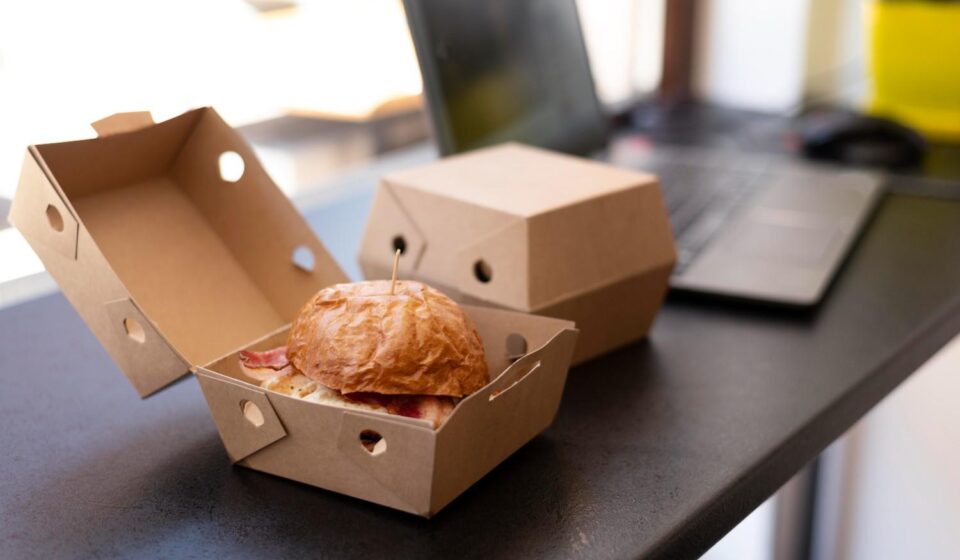

The first time I catered a wedding that served sliders instead of a plated entrée, I learned something fast: the food was never the hard part. Getting forty mini burgers to a table hot, intact, and looking like they belonged at a wedding that was the actual challenge. Most standard takeout boxes are built for one full-size burger, not a tray of two-bite versions, and using the wrong container turns a fun menu idea into a soggy, sliding mess by the time it reaches the guest.
That gap is exactly why compact, purpose-built packaging has become its own small category in the food service world, and its worth understanding if you’re running a food truck, a catering business, or a restaurant that’s added sliders to the menu.
Why Standard Burger Boxes Don’t Work for Minis
A regular burger clamshell is sized and vented for one large patty. Drop three or four mini burgers into that same box and you get two problems: they slide around during transport, and the trapped steam from multiple smaller patties condenses faster than it would with one large one, softening the bun before the customer even opens the lid.
Compartmentalized trays and smaller individual boxes solve both issues. Dividers keep each slider in place, and the reduced internal air volume means less steam buildup per compartment. It sounds like a minor detail until you’ve watched a customer open a box of mushy buns at a catered event — then it’s obviously worth the extra design thought.
Materials Are Shifting Toward Grease-Resistant Kraft
A few years ago, most compact food boxes defaulted to plain white cardboard or, worse, styrofoam. That’s changed. Grease-resistant, uncoated kraft paperboard has become the default material for smaller food containers, for a few practical reasons: it holds up against oil and moisture from the patty and toppings, it’s compostable or recyclable depending on the coating used, and it takes print well, which matters a lot for branded catering and food trucks that treat the box as part of the presentation.
Some suppliers have gone further and switched to plant-fiber-based coatings instead of the plastic laminate that used to be standard on grease-resistant boxes, which makes the whole container easier to recycle or compost after use.
Ventilation Design Has Gotten More Specific
Older to-go boxes used a handful of generic vent holes. Newer packaging designed specifically for smaller portions think a compact mini burger boxes format built for sliders, appetizer portions, or party trays — uses more targeted micro-perforation patterns positioned over each compartment rather than a few holes scattered across the lid. That keeps each slider from steaming while still holding in enough warmth that the food doesn’t arrive cold.
Compact Sizing Is Cutting Material Waste
Sliders and mini burgers don’t need a box built for a full-size sandwich, and food businesses have started noticing how much they were overspending on oversized packaging out of habit. Right-sized boxes — built to the actual footprint of two, four, or six sliders — use less cardboard per order, stack more efficiently in a delivery bag or catering crate, and cost less per unit once you’re ordering in volume. For a food truck running tight margins, that’s not a small thing.
Branding Has Become Part of the Box, Not an Afterthought
Because sliders and mini burgers show up so often at catered events, pop-ups, and food festivals, more operators are treating the box itself as marketing. A simple one-color logo stamp on kraft board, a custom die-cut window so the food is visible before the lid opens, or a branded insert card — these small touches turn a disposable container into something a guest photographs and shares, which is free advertising that a plain box doesn’t earn.
What This Means for Anyone Serving Minis
If you’re adding sliders or mini burgers to a menu, the packaging decision is not a minor logistical afterthought it directly affects whether the food arrives looking and tasting the way it did in the kitchen. Compartmentalized, grease-resistant, right-sized boxes solve real problems that generic containers don’t, and the branding upside is a bonus most operators only discover after they’ve already made the switch.
The businesses getting the most out of this trend aren’t just picking a smaller box. They’re picking one designed around how sliders actually behave in transit, and that difference shows up the moment a guest opens the lid.