
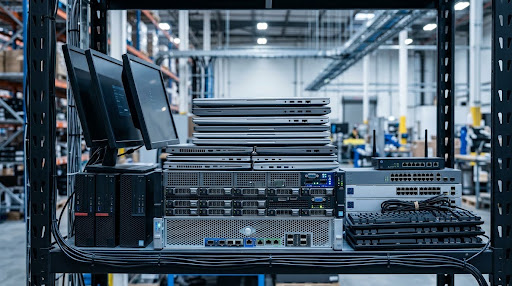

Scaling a business used to mean hiring more people and finding a bigger office. In 2026, it means something else entirely: making sure every new hire has a laptop that works on day one, every remote team has reliable networking gear, and every department has the tools to actually do their jobs. This is where bulk IT procurement quietly becomes one of the most important operational decisions a growing company will make. Get it right, and technology becomes an invisible enabler of growth. Get it wrong, and you end up with mismatched devices, budget overruns, and IT teams drowning in support tickets.
The stakes are higher than they were even a few years ago. Supply chains are still recovering from years of disruption, chip shortages come and go in waves, and lead times for certain components remain unpredictable. Businesses that treat bulk IT procurement as an afterthought, something handled reactively whenever equipment breaks or a new office opens, tend to pay more and get less. On the other hand, companies that build a relationship with a dependable enterprise it hardware supply partner early on tend to weather these disruptions with far less friction, because they have consistent access to inventory, predictable pricing, and a vendor who understands their long term needs rather than just processing a one time order.
So what does a smart approach to bulk IT procurement actually look like this year? Let us walk through it.
Why Bulk IT Procurement Looks Different in 2026
The old model of procurement, where a company simply ordered whatever was cheapest or fastest to ship, no longer holds up. Hybrid work is now permanent for most industries, which means hardware needs to support employees working from home offices, co working spaces, and corporate headquarters simultaneously. Additionally, cybersecurity requirements have tightened considerably, and devices purchased in bulk now need to meet compliance standards that simply were not a concern five years ago.
Furthermore, sustainability has become a genuine business consideration rather than a marketing talking point. Many growing companies are now expected, by investors, partners, and even employees, to demonstrate responsible sourcing and end of life disposal practices for their technology. As a result, bulk IT procurement in 2026 is not just about buying enough devices. It is about buying the right devices, from the right sources, in a way that supports the company’s broader operational and ethical goals.
The Shift from Reactive to Strategic Purchasing
Historically, many small and mid sized businesses treated technology purchases as a reactive expense. A laptop breaks, someone orders a replacement. A new employee starts, someone scrambles to find a spare machine. This approach might work when a company has ten employees, but it collapses quickly once a business starts scaling toward fifty, one hundred, or more.
Instead, forward thinking businesses are shifting toward strategic, planned bulk IT procurement cycles. This means forecasting hardware needs based on hiring projections, budgeting for replacement cycles before devices actually fail, and negotiating volume based pricing well in advance of when the equipment is actually needed. This shift alone can save a growing company significant money, since last minute purchases almost always cost more than planned ones.
Building a Bulk IT Procurement Strategy That Scales
Creating a procurement strategy that grows alongside the business requires more than simply increasing order sizes. It requires rethinking how purchasing decisions get made in the first place.
Start With a Clear Hardware Standardization Policy
One of the simplest ways to make bulk IT procurement more manageable is to standardize the hardware your company uses. When every department is requesting different laptop models, monitor sizes, and accessories, procurement becomes a logistical nightmare, and IT support becomes far more complicated because technicians have to learn and maintain dozens of different configurations.
Instead, successful companies typically define two or three approved hardware tiers, for example a standard laptop for most employees, a higher performance option for engineering or design teams, and a lightweight option for field or travel focused staff. This approach not only simplifies purchasing but also strengthens negotiating power with suppliers, since predictable, repeatable orders are more attractive to vendors than scattered, inconsistent ones.
Evaluate Total Cost of Ownership, Not Just Sticker Price
It is tempting to chase the lowest upfront price when buying in bulk, but that number rarely tells the full story. A cheaper device with a shorter lifespan, weaker warranty coverage, or higher failure rate can end up costing significantly more over three or four years than a slightly pricier alternative built to last. Growing businesses should factor in warranty terms, expected refresh cycles, energy consumption, and the cost of IT support hours when comparing vendors, rather than focusing solely on the initial invoice.
Choose Vendors Who Understand Growth, Not Just Transactions
Perhaps the most overlooked part of bulk IT procurement is vendor selection. Many businesses default to whichever supplier offered the lowest quote on their last order, without considering whether that vendor can actually support them as they scale. A partner who genuinely understands enterprise it hardware supply chains, including how to manage lead times, allocate inventory during shortages, and offer flexible financing for larger orders, becomes an operational asset rather than just a line item in accounts payable.
When evaluating potential suppliers, growing businesses should ask about their inventory depth, their ability to fulfill recurring orders on a schedule, their return and replacement policies, and whether they offer configuration services such as pre installing software images or asset tagging before devices even arrive on site. These small conveniences add up to substantial time savings for internal IT teams.
Practical Steps for Managing Bulk IT Procurement Efficiently
Beyond strategy, there are concrete operational habits that make bulk IT procurement noticeably smoother.
Forecast Ahead of Hiring Plans
Rather than waiting until a new hire’s start date to order equipment, companies should align procurement timelines with hiring forecasts from human resources. Even a thirty to sixty day lead time can prevent the scramble that often results in overpriced, rush ordered devices.
Centralize Procurement Decisions
As companies grow, it becomes tempting to let individual department heads make their own purchasing decisions. While this can feel efficient in the short term, it usually leads to fragmented spending, duplicated efforts, and missed volume discounts. Centralizing bulk IT procurement under a single team or approval process, even if that team is small, tends to produce better pricing and more consistent hardware standards across the organization.
Build in Flexibility for Uncertainty
Even the best laid procurement plans can be disrupted by sudden hiring surges, unexpected equipment failures, or supply chain hiccups. Smart businesses build a buffer into their bulk IT procurement plans, whether that means keeping a small reserve of spare devices on hand or maintaining a flexible agreement with their supplier that allows for quick reordering without renegotiating terms from scratch every time.
Prioritize Security and Compliance From the Start
Configuring security settings, encryption, and compliance software after devices have already been distributed to employees is inefficient and risky. Instead, businesses should work with their hardware supplier or internal IT team to establish standardized security configurations that get applied before devices are shipped out, ensuring every new piece of equipment meets company policy from the very first login.
Looking Ahead
Growing businesses in 2026 face a technology landscape that rewards planning and punishes improvisation. Bulk IT procurement is no longer a background task handled whenever convenient. It is a strategic function that touches budgeting, security, employee experience, and operational resilience all at once. Companies that standardize their hardware, evaluate true long term costs, forecast ahead of hiring needs, and build genuine partnerships with reliable suppliers will find themselves far better positioned than those still treating every purchase as an isolated transaction.
Ultimately, the businesses that thrive this year will be the ones who stop asking how quickly they can buy equipment and start asking how intelligently they can plan for it. A thoughtful, well structured approach to bulk IT procurement is not just an IT concern. It is a foundation for sustainable growth.